

Under the Sun: A D&D5E Excursion is a high fantasy adventure that combines exploration, roleplaying, puzzle-solving, and combat with a story rooted in ancient mysteries, cultural history, and paranormal activity.
Within the lands of a remote desert, nestled deep among the vast sand dunes, the Temple of the Forgotten is surrounded by the ancient ruins of a once-great civilization. Rumors of treasure and paranormal activity, the possibility of historic discoveries and the solace of meditative contemplation have attracted many adventurers from a wide range of backgrounds to the region who dare to travel across this unforgiving landscape. It is a journey into a land of mystery, of pitfalls and untold wonders yet to be discovered.
Designed as both a standalone adventure and a supplement for existing desert-based campaigns, the module gives game masters a flexible setting filled with discoveries, dangers, and supernatural intrigue.


Quick Facts
- Project: Under the Sun: A D&D5E Excursion
- Industry: Tabletop Roleplaying Games (TTRPG)
- Project Type: Publication Design
- Role: Creative Director, Graphic Designer, Cover Artist & Illustrator
- Timeline: Ongoing Product Development
- Tools: Adobe Photoshop, Canva, Imagine by Vyro, Dungeondraft v. 1.0.3.1
- Skills Demonstrated: Publication Design, Cover Design, Illustration, Image Compositing, Typography, Layout, Visual Storytelling
Key Takeaways
- Created a cohesive visual identity for a 45-page high fantasy tabletop adventure.
- Blended Art Deco influences with the visual language of classic adventure and archaeological films.
- Designed a print experience that balances cinematic storytelling with practical game master usability.
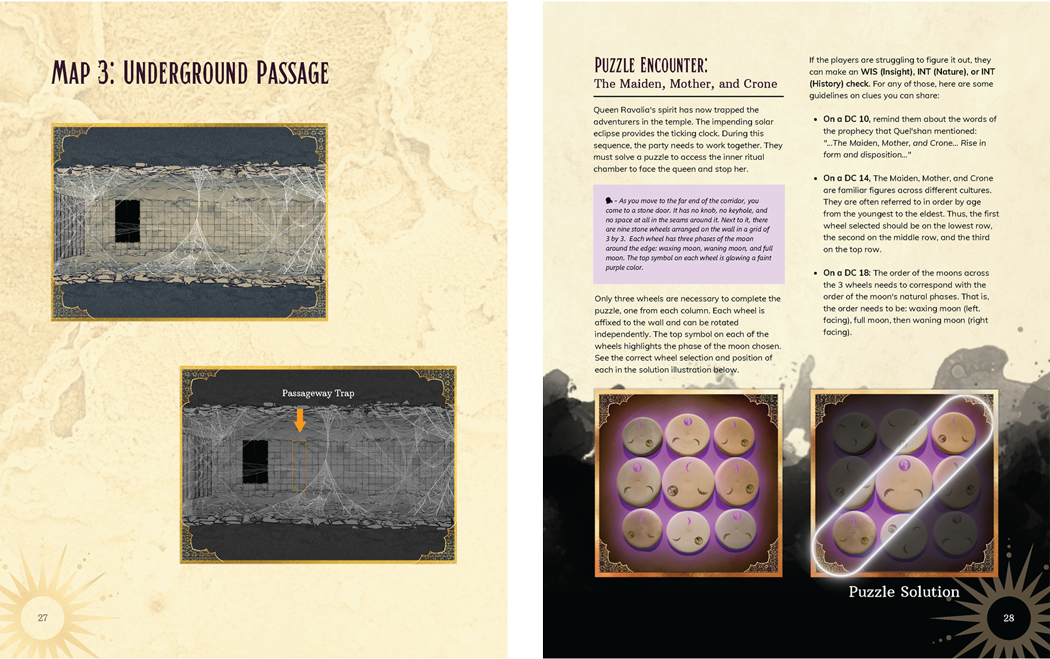
- Created and integrated cover art, illustrations, maps, character presentations, puzzles, and game-reference material into a unified publication.
- Used typography, imagery, color, and recurring graphic elements to guide readers through the adventure.
- Used AI-assisted imagery as one part of a larger creative process involving art direction, compositing, editing, and graphic design.
The Challenge
For this project, I was inspired by the adventure films I grew up loving, particularly Indiana Jones, The Mummy, and The Fifth Element.
The challenge was translating that cinematic sense of adventure into a 45-page tabletop roleplaying book that still had to function as a practical tool for a game master. The design needed to support exploration, roleplaying, puzzle-solving, combat, lore, character information, maps, and game mechanics without losing the feeling that everyone at the table was embarking on an epic journey.
Design Process
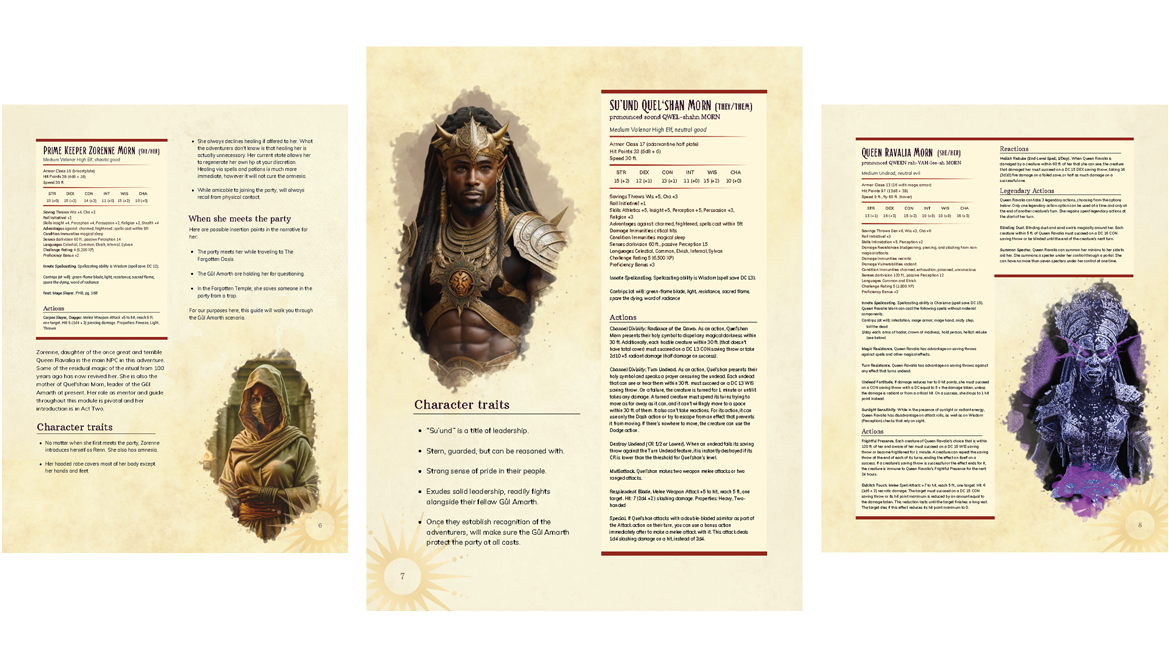
The Crystal Desert setting became the visual foundation for the book. I wanted the environment to feel mysterious and beautiful, but also dangerous, so the palette and textures balance sun-baked desert landscapes with darker supernatural elements.
Combining high fantasy touch points with some of my favorite aesthetics of Art Deco was so much fun! I crafted a cohesive visual system by blending geometric forms, ornamental details like recurring sun motifs, and gold accents with aged textures, atmospheric artwork, and dramatic imagery to create a world that feels both ancient and cinematic.
Deliverables
- Cover design
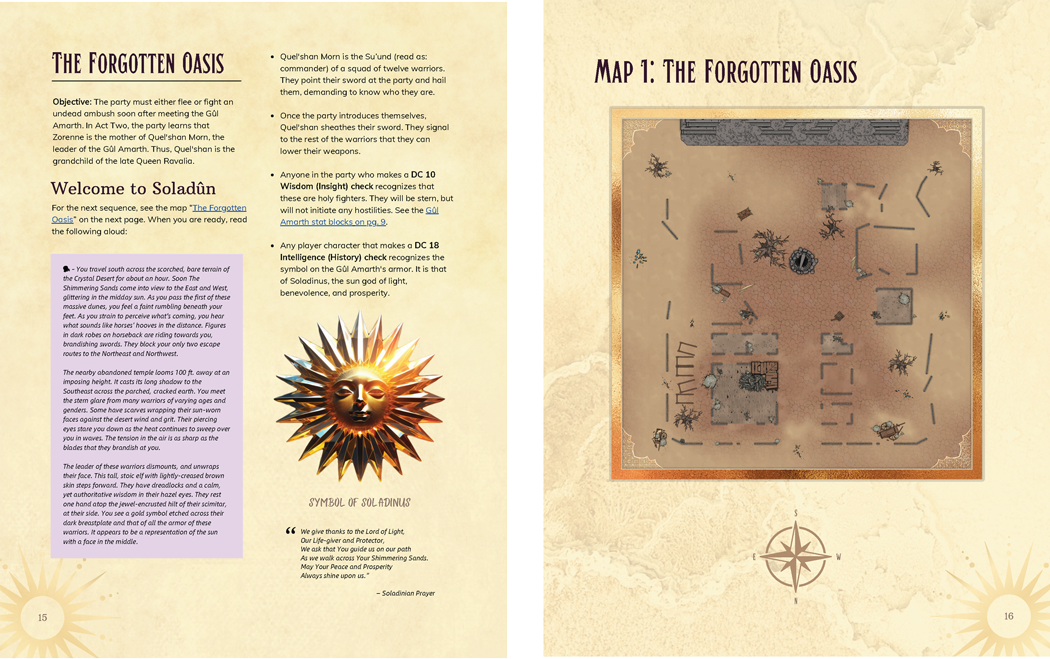
- Interior layouts
- Section dividers
- Character and creature pages
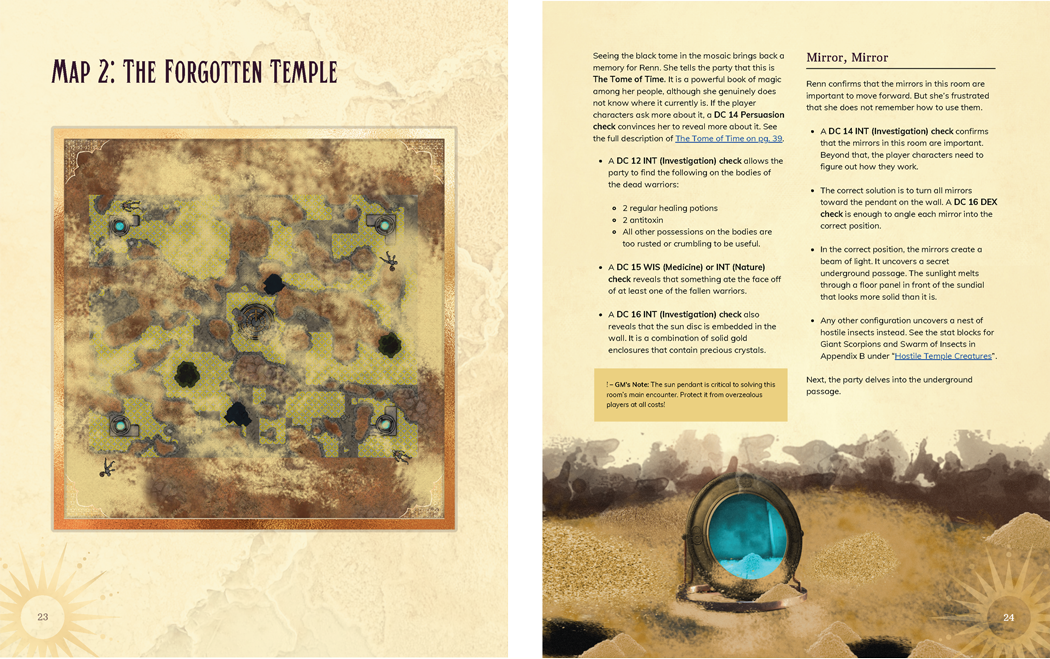
- Encounter and game-reference pages
- Maps and puzzle graphics
- Illustrations and supporting artwork
Tools & Workflow
AI Used
- Imagine by Vyro (AI-assisted image generation, conceptual image development, fantasy environment and character imagery, visual ideation)
Design Software
- Adobe Photoshop (image compositing, retouching, mockups, and presentation assets)
- Canva (graphic asset generation, visual concept exploration, image composition and refinement, supporting illustration)
Design Disciplines
- Art Direction
- Editorial Design
- Publication Design
- Print Layout
- Typography
- Visual Identity
- Image Compositing
- Map Presentation
- Information Design
What I Learned
This project grew out of my love for the adventure trope and my desire to tell that kind of story in a cinematic way. It taught me that visual design can establish the emotional promise of the story before the reader ever begins it.
I also learned a great deal about incorporating AI-assisted imagery into my own creative workflow. Rather than treating AI as the finished creative product, I used it as one of several tools available to me, then applied my own creative direction, visual judgment, editing, compositing, and design decisions to bring the imagery into the larger aesthetic of the book.
And perhaps most importantly, this project pushed me to think beyond individual pages and toward the experience of the publication as a whole. A tabletop adventure has to look good, but it also has to work while someone is sitting at a table trying to run a game. That meant constantly balancing atmosphere with readability, visual excitement with information hierarchy, and storytelling with usability.